
Heads up: some ticket and gear links in this guide are affiliate links. If you book or buy through them, we may earn a commission at no extra cost to you. See our affiliate disclosure.
Disney World with kids ages 2 through 8 is one of the most magical — and most logistically demanding — trips you'll ever take. The parks are enormous. The Florida sun is relentless. And if your kid needs something you forgot to pack, you're looking at a 20-minute trek back to the stroller or worse, a full meltdown in the middle of Main Street.
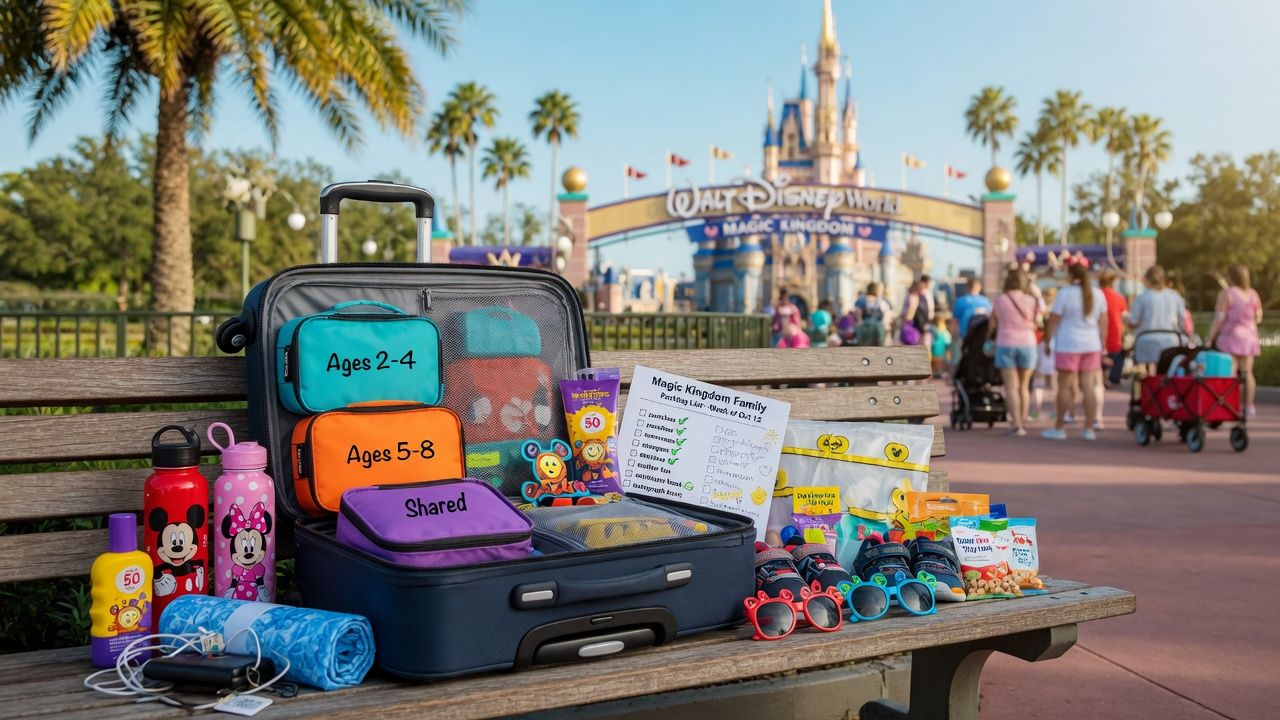
This isn't a generic 100-item packing list. It's 25 practical items for Disney World with young kids, chosen for the heat, crowds, and long days of a typical park visit. It's organized by what matters most, with age-specific guidance for toddlers through early elementary.
The 25 Disney World Packing List Essentials for Kids (2026)
Essentials Every Kid Needs at Disney World
Start here with items 1–15 — these apply to every child ages 2–8. Then add the age-specific items (16–25) below.
- Sunscreen SPF 70+
Florida sun is no joke, especially summer through early fall. Reapply every 2 hours — a bench in the shade or a stroller with a canopy works for midday touch-ups. A missed reapplication at 2pm can mean a burn by dinner. - Insulated water bottle (32oz, leak-proof)
Disney provides free water at quick-service restaurants. Bring a bottle and refill it often — regular water breaks are one of the simplest ways to keep a long park day going. - Comfortable walking shoes (already broken in)
Your kid will walk 8–12 miles over a 4-day trip. New shoes mean blisters. Don't break in new footwear at Disney — pack shoes they've already worn in and trust. - Portable phone charger (20,000mAh minimum)
Disney's Lightning Lane system, mobile food ordering, and the Play Disney Parks app will drain your battery. A dead phone means no Lightning Lane access — one of the most frustrating situations in the parks. - Cooling towel or evaporative wristband
Orlando summer days are hot and humid, and young kids can't always tell you they're too hot. Wet a cooling towel, drape it on their neck, and pair it with shade and water breaks. If a child shows signs of heat illness, get help from park First Aid or a doctor. - Lightweight rain poncho (per person, in your bag not the stroller)
Afternoon thunderstorms roll through Orlando like clockwork from May through September. Full ponchos are essential — not just a hat. One per person, stored in your bag, ready before the sky turns dark. - Small backpack or diaper bag with organization pockets
You'll carry this for 8–12 hours a day. Look for one with a separate compartment for a change of clothes and a quick-access pocket for snacks. The organizational structure matters more than the brand. - Two snacks per child per park day
Disney's quick-service meals are expensive and lines are long. Pack familiar snacks your kids actually like — granola bars, fruit pouches, crackers — to head off hunger meltdowns before they start. Bring more than you think you'll need. - Change of clothes (one full set, left in the stroller or locker)
One water ride, one spilled drink, or one potty accident and you're dealing with a wet, upset kid. A spare outfit stored in the bottom of the stroller basket has saved more than a few Disney days. - Waterproof phone pouch or dry bag
Required for Avatar Flight of Passage, Kali River Rapids, and any splash pad area. Don't risk your phone — get a pouch that actually seals. Your Lightning Lane confirmation lives on that phone. - Mini first-aid kit (band-aids, children's Tylenol, anti-itch gel)
Disney has first-aid stations, but walking there takes time. A small kit in your bag handles blisters, bee stings, and Tylenol for post-ride earaches in minutes. Keep it simple — you don't need a full medical kit. - Character autograph book or laminated card
Some kids connect with characters through signatures more than rides. The laminated cards are more durable and work with dry-erase markers for reuse — better for younger kids who don't need a full book. - A comfort item from home (small)
Whether it's a stuffed animal, a small blanket, or a pacifier — bring it. Disney overstimulation is real, and a familiar object is worth its weight in gold when your kid is melting down at 4pm. - Packing cubes or compression sacks
Keeps your suitcase organized by day or family member. On move-out day, you can roll dirty clothes into one cube and keep clean clothes separate. At the parks, you can find things without digging through everything. - Stroller fan with clip (USB rechargeable)
Florida heat + a napping toddler in a stroller = a very unhappy kid. A clip-on stroller fan (some have a misting option) moves air and can make a shaded stroller more comfortable. Follow the maker's safety guidance, keep fingers and straps clear, and don't rely on a fan alone in high heat. USB rechargeable means you top it off from a battery pack during lunch.
Packing for Kids Ages 2–4 (Toddlers and Preschoolers)
This age group has the most specific needs — and the least ability to tell you when something is wrong. These 5 additions complete the set as items 16–20 of the 25 essentials:
- Stroller (rent or bring your own, no larger than 31" x 52")
Even if your 4-year-old "doesn't need a stroller," bring one. They will crash around 2pm and you will be carrying them. Disney rents strollers at the front of each park ($15–$31/day) through a third-party service — they are not operated by Disney. Book in advance. - Diapers, wipes, and changing supplies
Disney has changing stations in every restroom, but you do not want to run out in the middle of Fantasyland. Pack 2 extra diapers over your expected daily use. Bring more wipes than you think you need — they're useful for everything from sticky fingers to spill cleanup. - Full-coverage rain poncho (not just a hat)
Kids in this range are often in splash pad areas without full rain protection. A full poncho that covers head and body is essential May through September. Skip the cheap dollar-store versions — they tear easily and don't actually keep kids dry. - Rider Switch planning for taller rides
Kids under 40" can't ride many headliners — Rise of the Resistance and Flight of Passage are 40", TRON Lightcycle Run is 48", and Frozen Ever After at EPCOT is typically 40". Use Rider Switch if an older sibling wants something your toddler can't: one adult rides while the other stays with the little one, then they swap without re-queuing. Confirm posted heights at the park — boards win over any guide. - Favorite comfort snacks on standby
Toddlers are inconsistent eaters. Bring more of their trusted snacks than you think you'll need. Hangry toddlers are harder to manage than hungry ones — and the cost of packing extra snacks is far less than a post-meltdown recovery.
Packing for Kids Ages 5–8 (Early Elementary)
This age group can walk more, wait in lines better, and handle more of the park — but they have their own needs. Add these 5 as items 21–25 of the 25 essentials:
- Their own small backpack
Let them carry their own water bottle, autograph book, and one snack stash. Kids this age feel empowered when they have "their stuff" and a sense of ownership over the trip. A backpack they can manage themselves matters more than capacity. - Motion sickness prevention (consult your pediatrician first)
If your child is prone to motion sickness, ask your pediatrician about motion-sickness options before your trip. - Emergency contact lanyard or card
If you get separated, your child needs to be able to tell a cast member your name and phone number. A laminated card in their pocket is more reliable than hoping they remember. Kids ages 5–8 can usually manage this — it also gives them confidence that they know what to do. - A "plan B" conversation before you go
Kids this age can feel disappointed when they don't get to ride something. Talk before you go: "Some rides might have long waits. We can use the Lightning Lane or try again later." Reduces the negotiating in the park and sets expectations before the crowds arrive. - Their own spending money in a lanyard pouch
Give them $10–20 in cash in a lanyard pouch. Letting them choose a souvenir is a meaningful part of the Disney experience for this age group — and it keeps them from trying to talk you into every gift shop. The lanyard also holds their ticket and Lightning Lane pass, so everything is in one place.
💡 Parent Tip: Label everything. Disney's lost-and-found handles thousands of items per week. Use a permanent marker on water bottles and add a luggage tag with your hotel name to the stroller. At minimum, put your phone number on your kid's autograph book and their bag.
---
Disney World Packing Hacks From Parents Who Learned the Hard Way
- Ship your packing cubes to your hotel before you arrive.
Most retailers will ship to Disney resort hotels. Address packages to: Guest Name, Resort Name, Reservation number (if you have it), City/State/ZIP for the resort, and hold for arrival date. Call the resort bell services desk a day ahead so boxes are ready at check-in instead of sitting in a back room while kids melt down in the lobby. - Pack cubes by family member, not by trip day.
Give every kid their own packing cube with their name on it. On the last day, their dirty clothes roll up into one cube. You don't have to repack anything — it's the single biggest mental load reducer in Disney trip logistics. - Keep one "park bag" pre-packed at all times.
Your hotel park bag — with sunscreen, ponchos, a first aid kit, and water bottles — should be ready to go before you leave for the airport. You reload it after every park day. Never hunt for essentials on departure day. - Freeze water bottles for your flight or drive.
Frozen water bottles count as a liquid, but they'll thaw by the time you land — giving you ice-cold water in the Orlando heat. Swap for a refill at the airport or hotel so everyone starts the trip with water on hand. - Use a lanyard for park tickets and Lightning Lane QR codes.
Kids can't be trusted not to crumple, lick, or lose a paper ticket. A lanyard keeps tickets readable and accessible. Most kids ages 5+ love wearing their ticket like a VIP pass — it becomes part of the experience rather than a source of stress.
What NOT to Pack for Disney World
- Diaper genies and large diaper bags
Disney parks are not diaper-changing marathons. A regular-size diaper backpack is enough. Leave the industrial stuff at home. - Pre-portioned daily food portions
You'll over-pack. If you run out of something, Disney has a store at every park entrance and a Target or Walgreens within 10 minutes of any resort. Pack a reasonable amount and buy the rest locally. - Formal clothing or nice shoes
You will be sweating. Your kids will be dirty. Pack for comfort, not appearances. One nice outfit for a character dining meal is the maximum. - More than 2 pairs of shoes per person
One pair of comfortable walking shoes, one pair of sandals or water shoes (optional for summer), and flip-flops for the hotel. That's the max. Shoes take up room in the bag and kids don't need more options — they just need the right ones. - Expensive cameras (leave the nice camera at home)
A smartphone is enough. You'll see parents with DSLRs and GoPros — and they're spending half their time managing the camera instead of being in the moment. The best Disney photos are the candid ones. The worst Disney moments are the ones you missed because you were looking through a viewfinder.
Quick Checklist: Disney World Packing for Kids
Toddler Packing Checklist (Ages 2–4)
- Stroller (reserved in advance)
- 6–8 diapers / pull-ups
- Travel wipes (full-size pack)
- Changing pad or mat
- 2 changes of clothes
- Lightweight rain poncho (full coverage)
- Insulated water bottle (12–16oz)
- Sunscreen SPF 70+
- Snacks (2 servings/day)
- Comfort item (stuffed animal, blanket)
- Children's Tylenol / pain reliever
- Diaper cream
- Lanyard with ticket
Early Elementary Packing Checklist (Ages 5–8)
- Comfortable walking shoes (broken in)
- Small personal backpack
- Insulated water bottle (24–32oz)
- Sunscreen SPF 70+
- Lightweight rain poncho
- 1 change of clothes
- Portable phone charger
- Snacks (2 servings/day)
- Motion sickness prevention (if needed)
- Lanyard with ticket and emergency contact card
- Autograph book or laminated card
- Comfort item
- Small toy or figurine for trading
- Spending money in lanyard pouch
Before You Pack: What You Need to Know About Disney World in 2026
- Kids under 3 enter free: Children ages 2 and under do not need a park ticket. They still need to be with a ticketed adult. Park reservations are no longer required for most standard tickets — still link your party's tickets in My Disney Experience and confirm any date-specific rules when you buy.
- Park tickets in 2026: start at $109/adult/day for base tickets, with Dynamic Surge Pricing pushing peak dates to $169–$189/day. Four-day and longer base tickets offer the best per-day value.
- Lightning Lane access: Lightning Lane Multi Pass (multi-attraction) and Lightning Lane Single Pass (individual premium rides) are optional paid add-ons. Price varies by date, park, and product — Multi Pass is typically a per-person daily rate; Single Pass is priced per person per headliner. Neither is included with base park tickets.
- Stroller sizes at Disney World: Maximum stroller dimensions are 31" x 52". Any stroller larger than this is not permitted in the parks.
- Outside food policy: Disney allows outside snacks and drinks (no alcohol, no glass containers, no loose ice). A small cooler in your bag is fine. Large coolers are not permitted. Ready to book tickets? Compare current family options on our deals page before you lock travel dates.
Frequently Asked Questions
What age is hardest to pack for at Disney World?
Ages 2–4 are the hardest to pack for because they can't articulate discomfort — hunger, heat, tiredness — until they're already in crisis. Proactive snack and water management, plus a stroller for naps, makes or breaks the day. The kids who meltdown most often are the ones whose parents didn't bring enough basics.
How many days do you need at Disney World with young kids?
Four to five days is the sweet spot for families with kids under 8. Two days minimum. This gives you one "slow" park day, one Lightning Lane optimization day, and recovery time for everyone. Rushing Disney with young kids is a mistake — the park is big enough that you'll miss half of it if you try to do too much.
Can I bring a stroller to Disney World?
Yes. Strollers are permitted and widely used. Rent one in advance through an authorized Disney vendor or bring your own. The maximum size is 31" x 52". Even if your child "doesn't need" a stroller, bring one for children under 6 — the park is large enough that afternoon crashes are almost guaranteed.
What do I do if my child gets hurt or sick at the park?
Every Walt Disney World theme park has First Aid (Disney's official First Aid page, accessed Oct 16, 2026), staffed by medical professionals. For emergencies, dial 911 or alert any cast member. First Aid locations are marked on park maps.
---
Plan Your Disney World Trip With Kids
Packing right is step one. Here's what to tackle next:
- Magic Kingdom rides under 40 inches — every short-rider attraction that actually works for preschoolers, plus a realistic one-day plan.
- Disney / Orlando ticket deals — compare current family ticket options before you lock travel dates.
- Ride finder by height — filter Magic Kingdom (and every other Orlando park) by your kid’s height before park day.
- Universal Orlando height requirements — if you’re mixing Disney and Universal on the same trip.